Monday, March 19, 2012

Industrial suburbia #1

Ballast Point Park is a quintessential Sydney experience.


Designed in 2009, by landscape architects McGregor Coxall, for the Sydney Harbour Foreshore Authority, the park is a transformed industrial wasteland.


Over multiple levels, there are echos of the former oil refinery site. 


The planting consists of local natives from seeds collected in the area.


Fallen concrete slabs breach the refinery walls, 
forming narrow gates and walkways. 


This is reclaimed land at it's best, and all with a glorious view of the Harbour.


Yep, we LIKE Ballast Point Park, and there's still loads of exploring to do...


Stay tuned for Industrial Suburbia #2 


Visit Ballast Point Park


Find out more about the Architects


Tuesday, March 13, 2012

Ballast Point

This week we are working in the harbourside suburb of Ballast Point.


The house dates back to the 1860s 
and is brimming with relics of long ago Sydney.


This area was all concrete (more 1960s than 1860s).


The house takes up the majority of the available land, 
folks were less inclined towards outdoor entertaining in those days.


It's a tight space to work in, although Lulu doesn't seem too bothered.


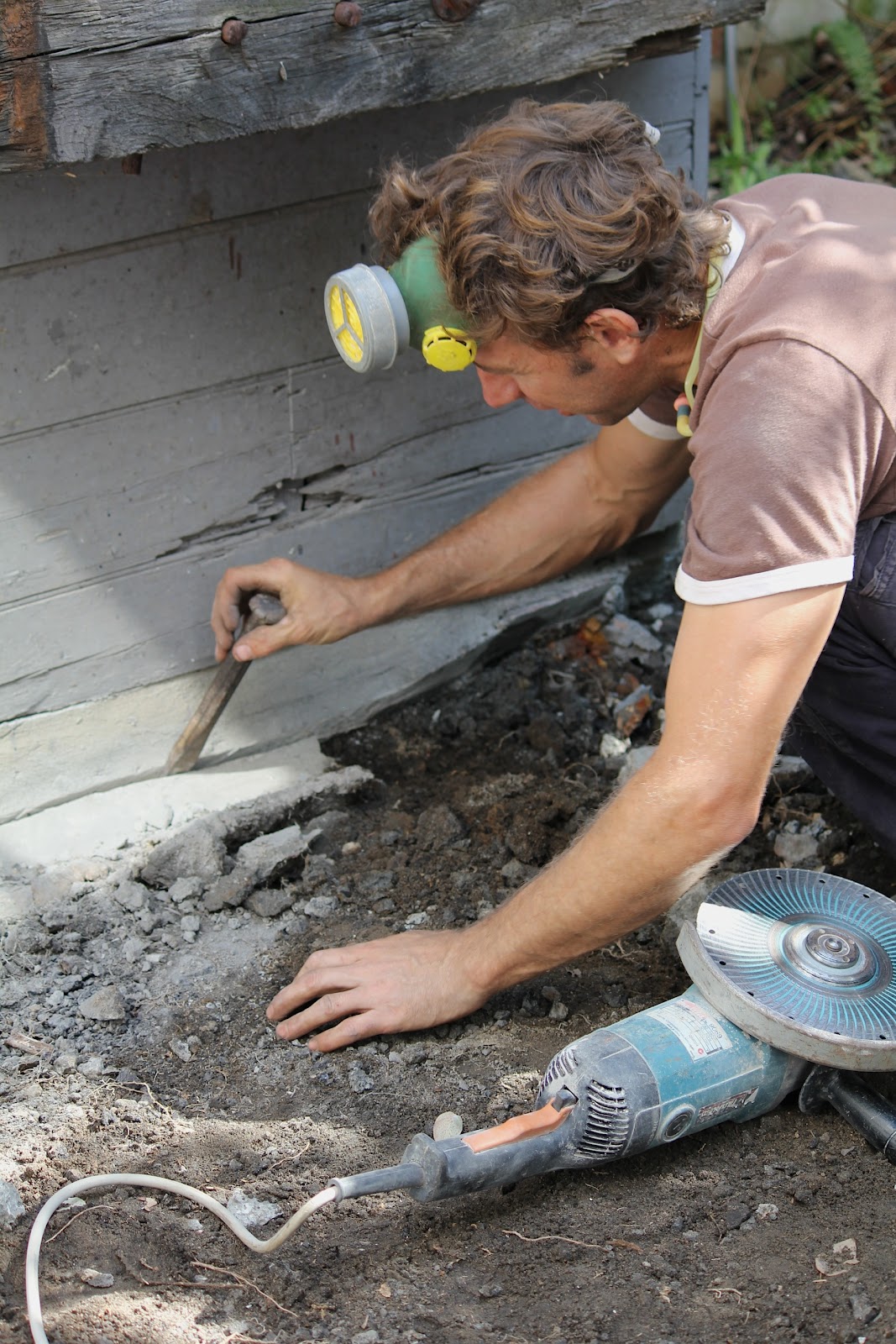
Brick saw, chisel and a respirator mask 
to guard against toxic concrete dust. 


Once the old terracotta pipes have been replaced
 the paving will commence


Stay tuned for a progress report next week...


Monday, February 6, 2012

Loving this rainy summer

Sure, there haven't been many beach days this summer, 
but Sydney's gardens are loving the rain.


Plants like Frangipani (Plumeria actuifolia), and Magnolia "Little Gem" (Magnolia grandifloralove to get wet, while the hardy Cordyline "Red Sensation" can cope with a variety of conditions. Grey leaf Lomandra (Lomandra confertifolia) provides a border for the back lawn.


At the front of the property, Agave (Agave attenuata), succulents that adore a humid environment, are bordered by purple leaved dwarf Flax (Phormium tenax "Elphin"), coastal rosemary (Westringia fruiticosa "Zena") and Cordyline.


A young Sydney Red Gum (Angophora costata) will provide 
colour and shade to a height of 15-20 metres at maturity. 


The border hedge of purple leaved Hop Bush (Dodonea viscosa) continues along the entire boundary, providing a thick screen at the side of the house.


The two Frangipani will provide shade and scent during the summer, while the dwarf Lillypilly (Syzigium "Hinterland Gold") will screen the fence 
with a lush, 3 metre tall hedge 
for privacy and an additional layer of green.


Kristen Martin, Landscape Architect
The Butchart Gardens, Landscaping


For a garden consultation

Contact
James Butchart
0408 264 964
james@butchartgardens.com.au


Wednesday, August 24, 2011

Decking in Summer Hill


Decking is a fantastic way to increase your outdoor living space.

This family home in Summer Hill has an expansive back garden. 

The Butchart Gardens built a wide deck to maximise the useable area.


Constructed from Tallow wood, the deck features 
weatherproof webbing to increase the life of the bearers.


Every structure needs a solid foundation.


Capped edging is an added feature, giving the impression of a floating deck.


To increase the life of the timber, we oiled it with a protective decking oil.


The sun came out as the deck was finished 


Just in time for some outdoor entertaining.


For a functional outdoor living space where you can enjoy 
Sydney's gorgeous Spring weather


Contact James Butchart
Phone 0408 264 964
email james@butchartgardens.com.au


Monday, August 15, 2011

The Man Who Planted Trees


This is the story of The Man who Planted Trees. 


L'Homme qui Plantait des Arbres


If you haven't read this book, you have missed a beautiful tale of one man's journey across a lost land, transforming the ground from a desolate wasteland to a lush, verdant expanse of green.


Published in 1953, The Man who Planted Trees was a work of fiction with a message that struck a chord well before it's time. This is an ecological fable that is as relevant today as it was 60 years ago.


When the Reader's Digest commissioned author Jean Giono to write a few pages for a feature article called "The Most Extraordinary Character I Ever Met", he created an allegorical tale that the magazine lapped up......


...until, an investigation by Reader's Digest found the author had misled the public by creating a work of fiction rather than a biography. "The Most Extraordinary Character I Ever Met" was to have been based on a real person, not some crazy, life-giving peasant who journeys alone, carrying out the work of God.


As the magazine's investigative team soon realised, tracking down the central character (a roaming shepherd who had never been schooled) was a thankless task. 


Indeed, finding the vast forests, planted so lovingly by the man or locating his tiny village, whose people had rediscovered the joy of trees, shade and fruit in abundance, was impossible. 


The Man who Planted Trees was not published by Reader's Digest after all, but in 1968, a German Publishing house, having "verifed" the existence of the shepherd from photographs, ran the story in an anthology of biographies. 


Giono had sent them a photo of "a typical handsome old man, clear eyed and with a calm expression,his bearing both proud and awkward, wearing what is clearly his Sunday best in honour of the occasion."


The anthology was a huge success and The Man who Planted Trees became a legend. 

The publishing house even went so far as requesting the name of the nearest railway station to the fictional village, so that fans of this lovely tale could visit the place where the man had lived and planted his enchanted forest.  

The author never revealed the location of that village. 


The Man who Planted Trees is a tale that belongs on every bookshelf. 


To have trees planted in your garden
contact The Butchart Gardens
Call or email James Butchart 

Phone: 0408 264 964 
Email:  james@thebutchartgardens.com.au


Tuesday, August 2, 2011

Tree Day


Any day is a good day to plant a tree, especially on Tree Day. 


July 31st is National Tree Day and we went along to the local GreenWay to lend a hand and do our bit to up the oxygen in our neck of the woods.  


The GreenWay connects the Cooks River Cycleway from Earlwood to the Iron Cove Bay Run at Haberfield, and it links the inner west council areas of Canterbury, Marrickville, Ashfield and Leichhardt, following Hawthorne Canal and Rozelle freight rail corridor. 
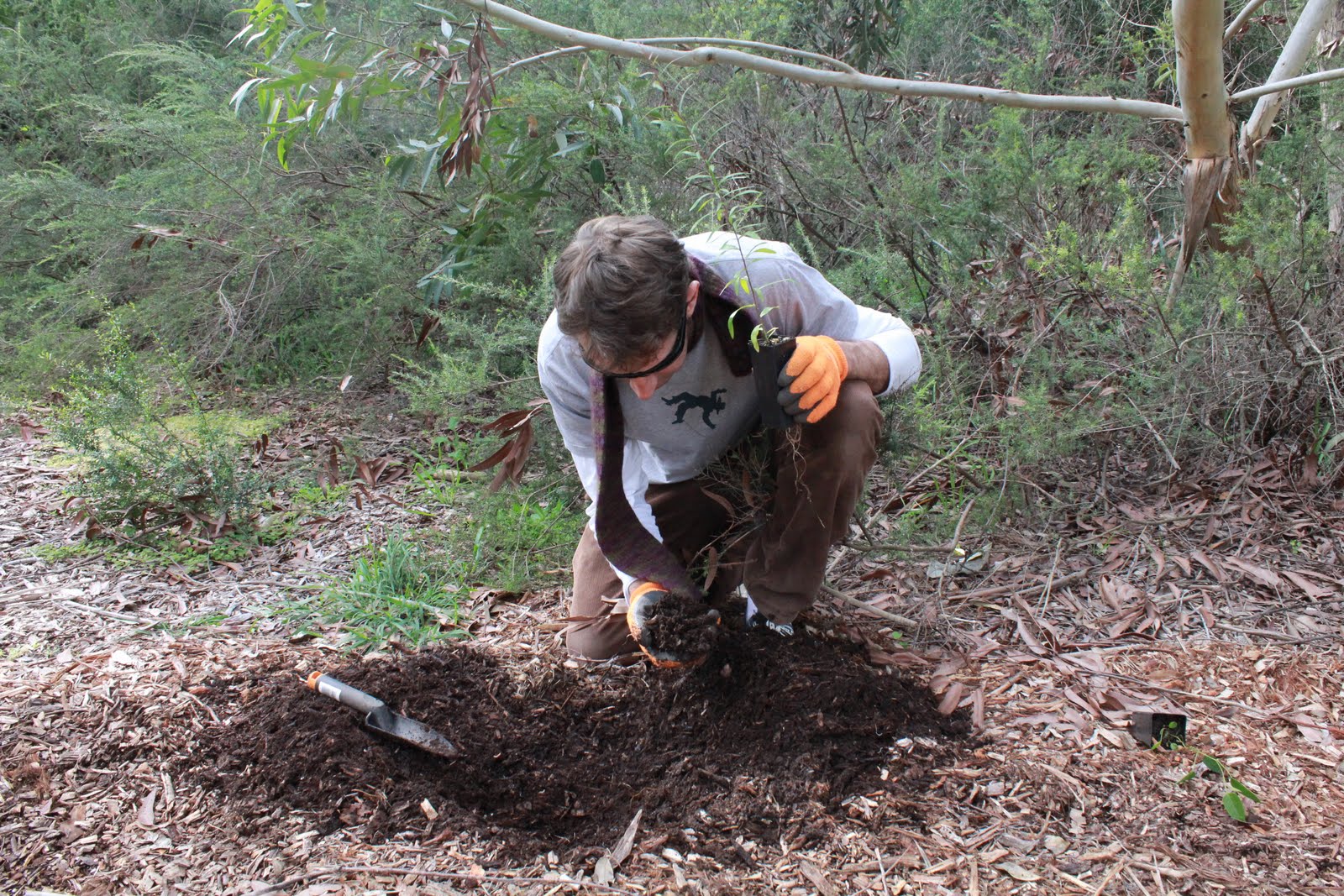


The proposed extension of the Light Rail along this corridor means less traffic and more trees.  Our local Tree Day Site was located along the Hawthorne Canal in Haberfield. 


Trees, trowels, gloves, instructions, water and biscuits were supplied (Italian biscuits of course... this is the Leichhardt Municipality after all). 


Our team of eight volunteers spent a pleasant few hours planting trees, shrubs and ground-cover native to the area.


Ed the friendly neighbourhood Lab supervised the workers. 


It's a great family activity, to plant a tree on a sunny Sunday morning. Nothing like getting your hands dirty and watching things grow.


Tools down.... time for some of those Italian biscuits!

These volunteers are looking forward to doing some more digging with their friends in 2012. A growing number of schools and community groups are getting involved every year.


For more information about National Tree Day 
and how you can get involved go to:


For information about the Greenway 
between the Cooks River and Iron Cove go to:


For a consultation with 
The Butchart Gardens

Contact James Butchart 
 0408 264 964
 james@butchartgardens.com